Compliance is part of the circuit.
A neck-worn radio/audio system crosses mechanical safety, RF exposure, spectrum, EMC, product security, privacy, recording consent, consumer protection, and materials regimes. Architecture decisions determine the obligations.
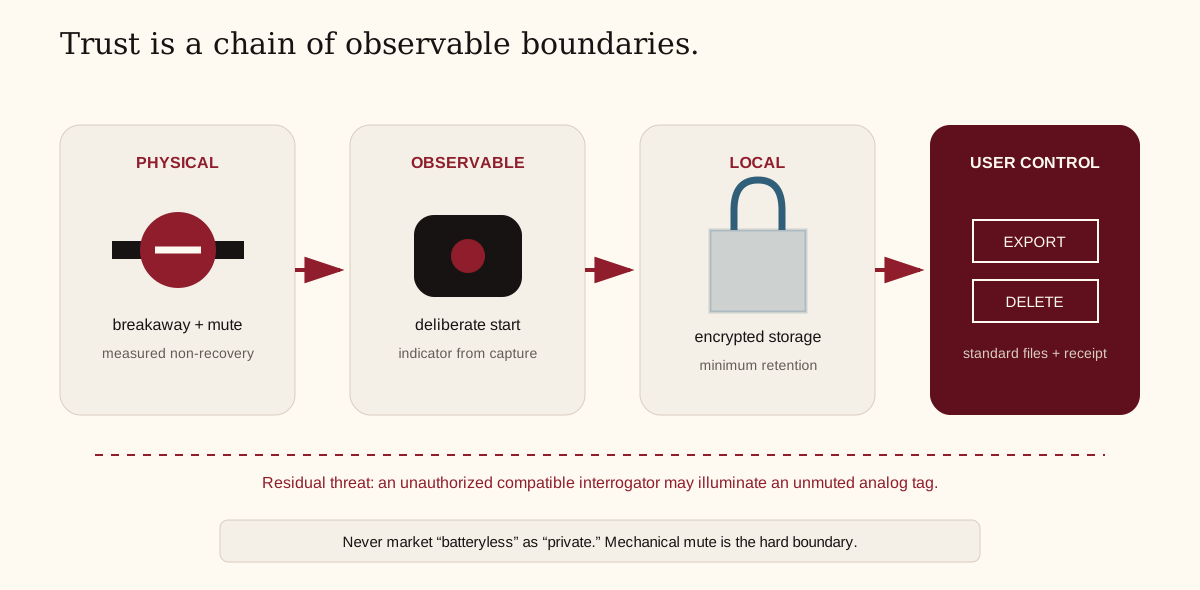
Human safety
- Breakaway behavior and one-handed removal are design inputs and production tests.
- No rigid closed neck structure; no tightening geometry.
- Use conservative, reviewed RF exposure methods for the actual reader/tag/body geometry.
- Perform skin-contact material and cleaning risk assessment; control supplier substitutions.
- Avoid medical claims. If intended use becomes diagnosis, treatment, or monitoring of disease, obtain specialized regulatory advice before development proceeds.
United States radio
The powered reader intentionally emits RF and generally enters FCC equipment authorization. FCC guidance distinguishes intentional radiators, which generally require certification, from unintentional radiators, which may use Supplier’s Declaration of Conformity depending on device type. Part 15 devices must not cause harmful interference and must accept interference; portable devices also require the applicable RF exposure analysis. FCC equipment-authorization explanation and 47 CFR Part 15.
Do not select a rule section from frequency alone. The emission type, bandwidth, duty cycle, antenna, conducted and radiated power, spurious response, host interfaces, and use distance all matter. Contract a Telecommunication Certification Body/test lab during architecture selection.
European Union radio and cyber
Short-range devices still fall under the Radio Equipment Directive when placed on the EU market. ETSI notes that SRDs include RFID, telemetry, and wireless microphones and must meet RED requirements. ETSI Short Range Devices. The final product may require applicable spectrum, EMC, safety, and cybersecurity conformity work, technical documentation, risk assessment, declaration, labeling, and post-market controls. Requirements and cited standards change; verify the current Official Journal and implementation dates at design freeze.
Voice and data
The FTC advises that voice-assistant users need to know when listening occurs, recommends a physical control, and emphasizes retention/deletion and account security. The FTC has also treated voice recordings and derived data as highly sensitive and brought actions involving retention and employee access. FTC consumer guidance and FTC business lessons.
- Default to local processing and minimum retention.
- Separate required service processing from optional product-improvement consent.
- Make deletion propagate to backups under a documented schedule.
- Treat audio, transcript, speaker labels, embeddings, and summaries as sensitive.
- Do not target children in the initial product. Children’s voices can trigger additional obligations such as COPPA.
Recording consent
US recording law varies by state, parties, context, and reasonable expectation; other countries vary further. The product must not present a simplistic “one-party/two-party” toggle as universal legal advice. For each launch jurisdiction, counsel should specify notice wording, consent evidence, workplace implications, cross-border processing, retention, subpoena response, and prohibited contexts.
Product baseline: an unmistakable visible indicator, deliberate start, audible/visual notice option, meeting-level consent acknowledgement, and a fast way to pause or delete.
Intellectual property
Relevant published patents include throat-contact wireless systems, body-vibration voice authentication, recording pendants, and recent multi-microphone pendant architectures. TagMic may also be covered by pending applications not readily apparent from publication alone. A professional landscape and claim chart are required before commercial design lock. See the FTO starter map.
Evidence package before pilot
- Intended use and excluded uses.
- Hazard analysis and risk controls with verification links.
- RF frequency/power profile, schematics, layouts, antennas, firmware controls, and test reports.
- RF exposure rationale for real operating configurations.
- Mechanical drawings, materials declarations, breakaway and aging data.
- Software bill of materials, update policy, threat model, penetration results, deletion tests.
- Consent UX and jurisdictional counsel memo.
- FTO opinion and licenses.
- Labeling, quick-start, cleaning, contraindications, support, returns, and incident response.
Use the working compliance checklist. It is an issue-spotting tool, not legal certification.