Sensor pod body
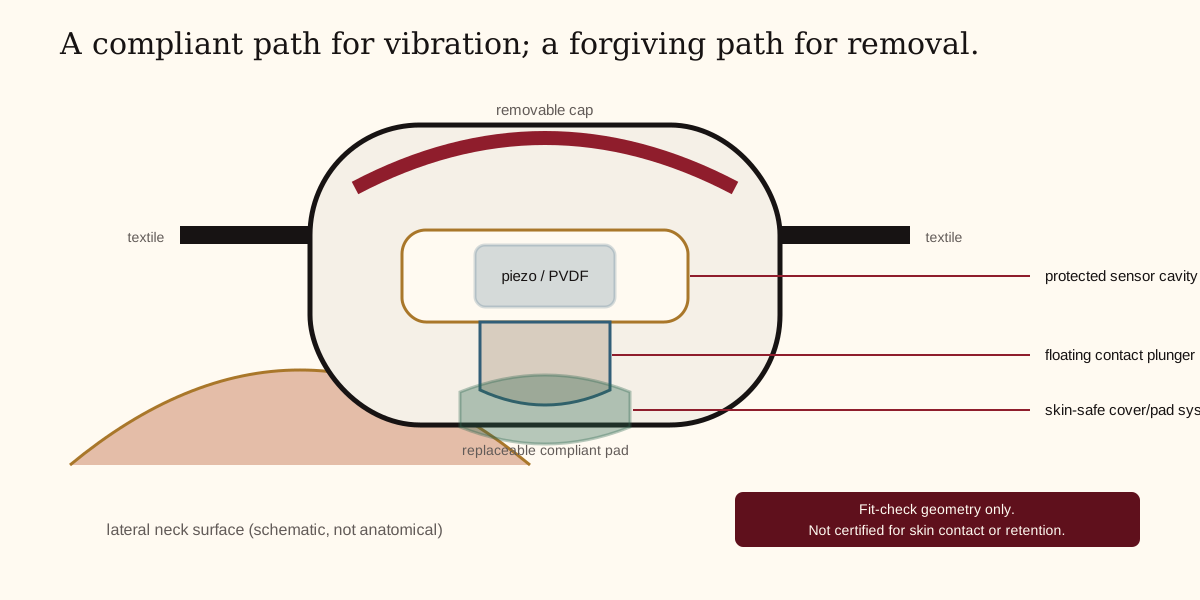
An oval fit-check shell with ribbon slots, internal cavity, and a circular skin-side opening for a floating pad/plunger.
The wearable has to maintain gentle, repeatable lateral contact while remaining visibly removable. Comfort, breakaway behavior, and RF repeatability are coupled mechanical requirements.
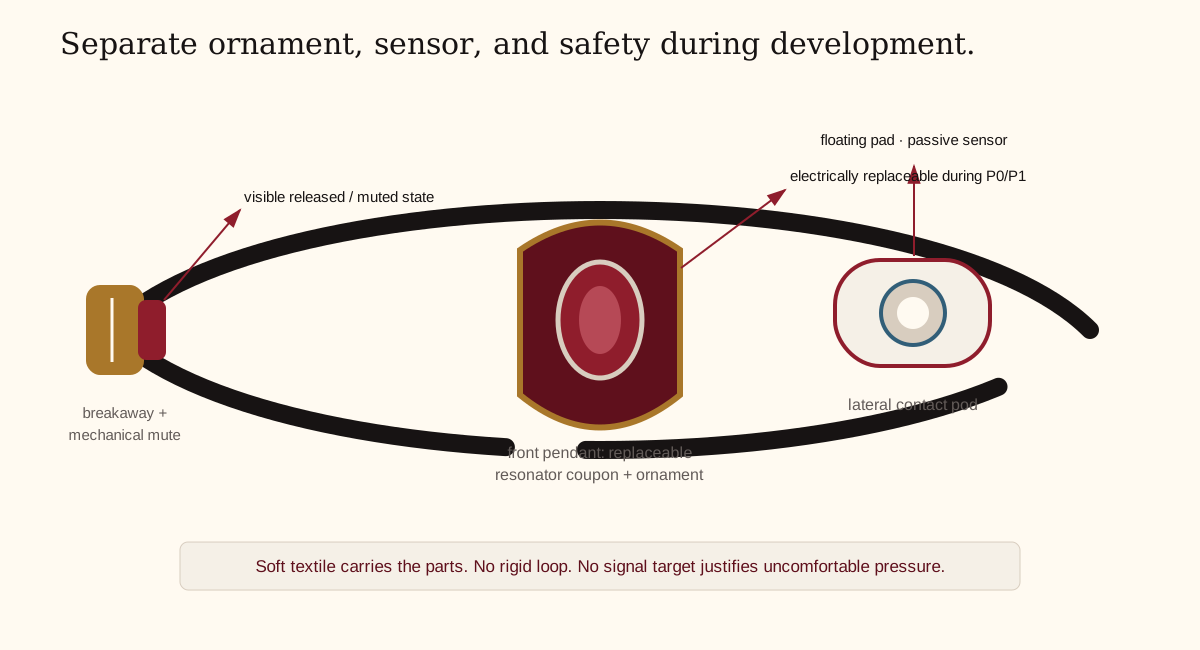
Start with a small contact pod against the lateral laryngeal area, not a hard element centered on the airway. Explore position systematically; anatomy varies. The pod should follow tissue with a soft pad while the textile band carries almost no structural load. A second decorative pendant may sit at the front without being the contact transducer.
| Layer | Job | Failure to watch |
|---|---|---|
| Skin-safe removable cover | Hygiene and cleanability | Irritation, sweat retention, acoustic damping drift |
| Compliant pad | Conform to tissue and transmit vibration | Too soft: low coupling; too hard: discomfort and motion knock |
| Floating contact plunger | Spread force and isolate enclosure edge | Bottoming out, edge loading, rattling |
| Piezo/PVDF element | Convert strain/vibration to voltage | Lead stress, depolarization, cracking, cable microphonics |
| Pod body/cap | Locate parts and provide textile slots | Sharp seam, sweat ingress, detuning, resonance coloration |
The production clasp should perform two independent functions with one visible action:
Do not choose a breakaway force from guesswork. Define use populations, hair/clothing snag cases, false-release tolerance, and applicable jewelry/lanyard requirements with a safety engineer; then test distributions after aging, sweat, cleaning, cold, heat, and manufacturing tolerance.
An oval fit-check shell with ribbon slots, internal cavity, and a circular skin-side opening for a floating pad/plunger.
A simple snap/adhesive development cover. It is not sealed and has not been validated for retention.
A jewelry-scale oval shell sized to hold replaceable resonator coupons. It includes a front jewel recess and textile bail.
OpenSCAD is the authoritative parametric source. A dependency-free Python fallback generates deterministic faceted fit-check STLs.
Use a balanced placement/pad experiment instead of adjusting by feel forever. Factors: lateral position, pad stiffness, pad thickness, contact area, band geometry, and posture. Responses: contact-to-room wearer SNR, other-speaker rejection, motion transient rate, comfort score, repositioning repeatability, and visible skin response after removal. Randomize order; include rest; stop on discomfort.